This blog post is the response to the thinking activity on Documentation: Preparing the List of Works Cited given by our professor ma'am Ms.Megha Trivedi.
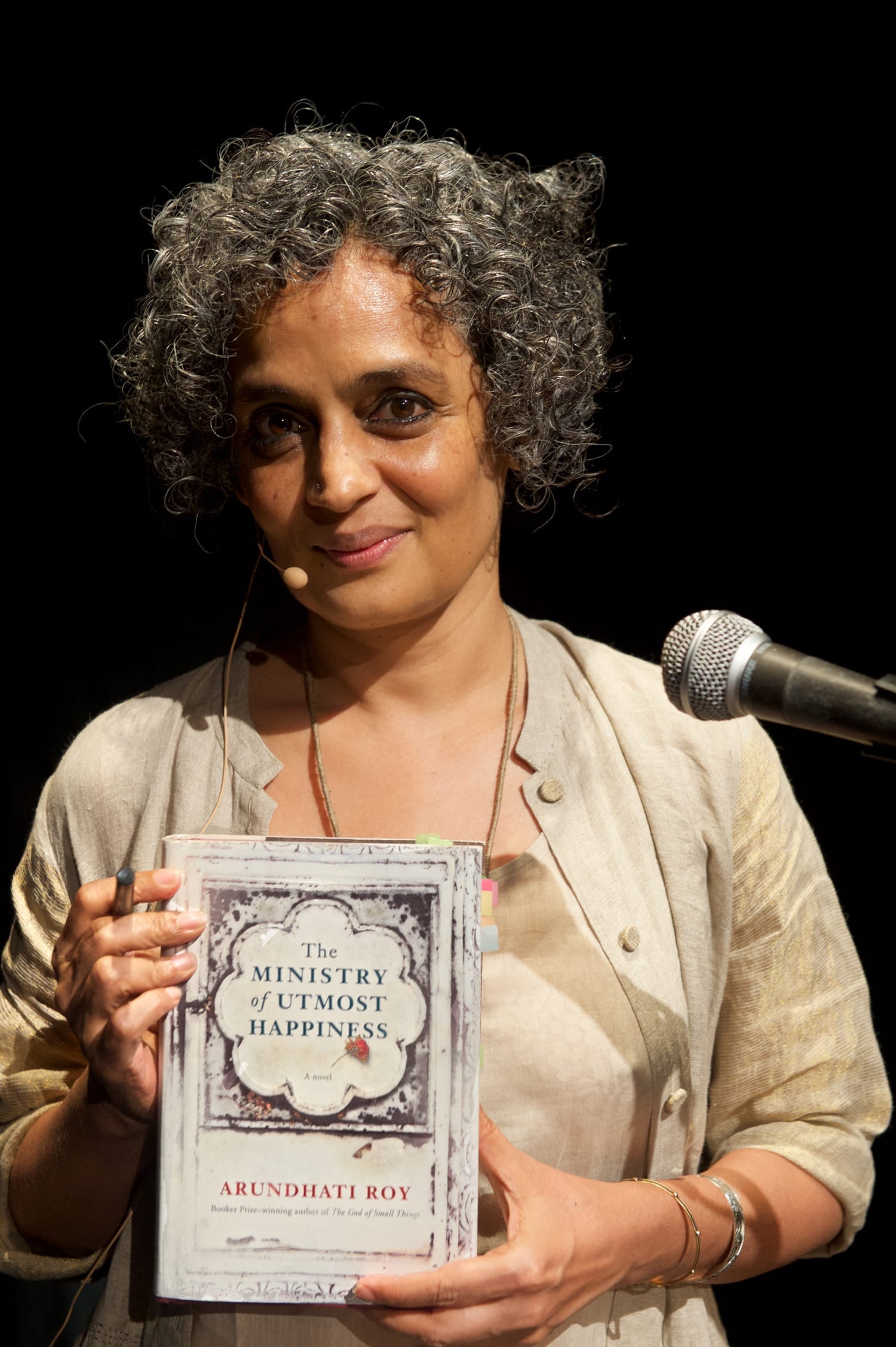
Arundhati Roy is one of the prominent authors in Indian English Literature. Her major writings covered the political, social, economic,
Is novel the right word, though? I hesitate. The Ministry of Utmost Happiness, hulking, sprawling story that it is, has two main strands. One follows Anjum, a hijra, or transwoman, struggling to make a life for herself in Delhi. The other follows Tilo, a thorny and irresistible architect turned activist (who seems to be modeled on Roy herself), and the three men who fall in love with her. But as was true of The God of Small Things, there is more than a touch of fairy tale in the book’s moral simplicity—or clarity, if you’re feeling charitable. Roy will say of a character, “He was a very clean man. And a good one too,” and he is swiftly, unequivocally pinned to the page. (Sehgal)
The Ministry of Utmost Happiness is a curious beast: baggy, bewilderingly overpopulated with characters, frequently achronological, written in an often careless and haphazard style and yet capable of breathtakingly composed and powerful interludes. The idea that the personal is political and vice versa informs its every sentence, but it also interrogates that assumption, examining its contours and consequences.
We begin with Anjum, who has taken up residence, for reasons that gradually unfold, in a graveyard, where she lives “like a tree” (part of the natural world, unspeaking, all-seeing is one interpretation; attempting to avoid notice another), but also as a “mehfil”, “a gathering. Of everybody and nobody, of everything and nothing. Is there anybody else you would like to invite? Everyone’s invited.” And indeed, over the course of the novel, Anjum’s graveyard home comes to function as a secular, or at least multifaith, sanctuary, protected by willpower from the turbulent outside world. (Clark and Myers)
Roy’s The Ministry of Utmost Happiness presents the shattered stories of misfits and weirdoes. The marginal people are suppressed under the socio-political structure of the government guided by the Hindu ideology in the novel. According to the novelist, after the rise of National Democratic Alliance (NDA) led by the right-wing Bharatiya Janata Party (BJP) in the political system, Muslims, Dalits, women and other ethnic minorities are thought to be out of the social structure. India has stood as a federal democratic country in the world with its stratified societies of diverse culture, ethnicity and religions. The novelist believes that a true democratic state ought to accept and tolerate different ideologies. It must accept pluralism and tolerance. The accretion of monolithic vision over governing the nation aggravates the social harmony, which lessens the individual potential, subjectivity and agency. Thus, the literary writings of postcolonial India have become one of the important hidden scenes to reflect the biased policies of the nation that hinders the citizens’ potentiality. (Aryal)
Roy effortlessly captures the love Anjum feels for an abandoned child named Zainab, whom she adopts as a daughter; and the friendship she develops with a young man who calls himself Saddam Hussain and who also takes up residence in the graveyard. Roy’s depiction of Tilo and Musa’s furtive romance in Kashmir has a cinematic quality — a reminder of her work as a screenwriter — as well as a genuine poignancy and depth of emotion. (Kakutani)
It’s when Roy turns from the specifics of her characters’ lives and tries to generalize about the plight of India that her writing can grow labored and portentous: “Normality in our part of the world is a bit like a boiled egg: its humdrum surface conceals at its heart a yolk of egregious violence. It is our constant anxiety about that violence, our memory of its past labors and our dread of its future manifestations, that lays down the rules for how a people as complex and as diverse as we continue to coexist — continue to live together, tolerate each other and, from time to time, murder one another.” (Kakutani)
Book Review by ChatGPT:
"The Ministry of Utmost Happiness" is a novel written by Arundhati Roy that takes the reader on a journey through the complexities of India's social and political landscape. At its core, the book is about the search for happiness and love in a world that is rife with inequality, violence, and injustice.
The novel follows the lives of several characters who are all connected in some way. The main character, Anjum, is a transgender woman who runs a guest house in Delhi. The other characters include Tilo, a woman who has a complicated love life; Musa, a Kashmiri militant; and Saddam Hussain, a young boy who grows up in a slum in Delhi. The book is set against the backdrop of India's recent history, including the rise of Hindu nationalism, the conflict in Kashmir, and the riots in Gujarat. Roy does an excellent job of weaving these events into the narrative of the book, without ever losing sight of the human stories at the heart of the novel.
One of the key themes of the book is the struggle for identity and belonging. All of the characters in the book are searching for a place where they can be themselves and feel accepted. Anjum, in particular, is a powerful example of this theme. As a transgender woman, she has faced discrimination and rejection her entire life. Yet she is determined to live her life on her own terms and find happiness in the world around her. Another theme of the book is the power of love to overcome even the most difficult of circumstances. Tilo, in particular, embodies this theme. Despite facing numerous obstacles and challenges in her relationships, she remains committed to the people she loves and is willing to make sacrifices for them.
One of the most striking aspects of the book is its use of language. Roy has a unique and poetic writing style that immerses the reader in the world of the book. Her descriptions of people, places, and events are vivid and evocative, and she has a talent for capturing the emotional nuances of her characters' lives. At times, the book can be difficult to follow due to its nonlinear structure and the sheer number of characters involved. However, this is a minor quibble given the depth and complexity of the novel as a whole. "The Ministry of Utmost Happiness" is a powerful and thought-provoking novel that offers a unique perspective on contemporary India. It is a testament to the resilience of the human spirit in the face of adversity, and a celebration of the power of love and acceptance to bring people together. Anyone who is interested in exploring the complexities of modern India and the human experience more broadly will find much to enjoy in this book.
Work Cited
Aryal, Binod. “Reading Polity from the Margin in Arundhati Roy’s the Ministry of Utmost Happiness.” SCHOLARS: Journal of Arts & Humanities, vol. 4, no. 1, 2022, pp. 77–86., https://doi.org/10.3126/sjah.v4i1.43057.
Clark, Alex, and Benjamin Myers. “The Ministry of Utmost Happiness by Arundhati Roy review – a patchwork of narratives.” The Guardian, 11 June 2017, https://www.theguardian.com/books/2017/jun/11/ministry-utmost-happiness-arundhati-roy-review. Accessed 14 March 2023.
Kakutani, Michiko. “Arundhati Roy's Long-Awaited Novel Is an Ambitious Look at Turmoil in India (Published 2017).” The New York Times, 5 June 2017, https://www.nytimes.com/2017/06/05/books/review-arundhati-roy-ministry-of-utmost-happiness.html. Accessed 14 March 2023.
Sehgal, Parul. “Review: ‘The Ministry of Utmost Happiness,’ by Arundhati Roy.” The Atlantic, 15 August 2017, https://www.theatlantic.com/magazine/archive/2017/07/arundhati-roys-fascinating-mess/528684/. Accessed 14 March 2023.
This blog post is a response to a thinking activity task on 'The Ministry of Utmost Happiness' given by our prof. Dr.Dilip Barad Sir. To know more about this task, CLICK HERE.
The Reader’s Digest Book of English Grammar and Comprehension for Very Young Children was written by S.Tilottama. The task is to read the book and answer the questions given at the end of the story.
THE OLD MAN & HIS SON
When Manzoor Ahmed Ganai became a militant, soldiers went to his home and picked up
his father, the handsome, always dapper Aziz Ganai. He was kept in the Haider Baig
Interrogation Centre. Manzoor Ahmed Ganai worked as a militant for one and a half years.
His father remained imprisoned for one and a half years.
On the day Manzoor Ahmed Ganai was killed, smiling soldiers opened the door of his
father’s cell. ‘Jenaab, you wanted Azadi? Mubarak ho aapko. Congratulations! Today your
wish has come true. Your freedom has come.’
The people of the village cried more for the shambling wreck who came running through
the orchard in rags with wild eyes and a beard and hair that hadn’t been cut in a year and a
half than they did for the boy who had been murdered.
The shambling wreck was just in time to be able to lift the shroud and kiss his son’s face
before they buried him.
Q 1: Why did the villagers cry more for the shambling wreck?
Maybe because militant groups destroyed the village to answer Ahmed Ganai's death.
Q 2: Why did the wreck shamble?
The answer to the soldiers is probably that they have the result to kill Ahmed Ganai.
ChatGPT:
We’ve trained a model called ChatGPT which interacts in a conversational way. The dialogue format makes it possible for ChatGPT to answer follow-up questions, admit its mistakes, challenge incorrect premises, and reject inappropriate requests. ChatGPT is a sibling model to InstructGPT, which is trained to follow an instruction in a prompt and provide a detailed response. (openai.com)
ChatGPT is AI tool developed by OpenAI company. It gives the generative text answered. Sometimes this tool gives appropriate answers related to the context of the text. These prompts given to AI can be misleading in the context. Because there are possibilities of multiple answering in answers to the literature's questions.
Here I shared Screenshots that I give to AI:
Prompt: Explain the theme of Resillience and Hope in Arundhati Roy's novel 'The Ministry of Utmost Happiness'.
Prompt: What is the role of Dung Beetle in the novel 'The Ministry of Utmost Happiness
Prompt: Write about the cover page and it's design.
Prompt: Write about the cover page of the novel 'The Ministry of Utmost Happiness' by Arundhati Roy.
This blog post is a response to a thinking activity task on 'The Ministry of Utmost Happiness' given by our prof. Dr.Dilip Barad Sir. To know more about this task, CLICK HERE.
I tried to cover the main points included in the novel in letter-writing form. CLICK HERE to read.
The Ministry of Utmost Happiness is the second novel by Indian-Anglian author Arundhati Roy. The first well-known novel 'The God of Small Things won the Booker prize, and this novel was also nominated.
There are 12 chapters. Each Chapter has significantly connected with each one while we come to know about the plot structure. These chapters' names are:
1. Where Do Old Birds Go to Die?
2. Khwabgah
3. The Nativity
4. Dr. Azad Bhartiya
5. The Slow-Goose Chase
6. Some Questions for Later
7. The Landlord
8. The Tenant
9. The Untimely Death of Miss Jebeen the First
10. The Ministry of Utmost Happiness
11. The Landlord
12. Guhi Kyon
Arundhati Roy:
As an Indo-Anglian author, Roy's writing is more realistic of the contemporary time in India. Her flashback method of telling the story, metaphors, irony, and paradox is very well captured by her. Critics also said that in 'The Ministry of Utmosts Happiness' her political overpowering in the novel let the story in dull mode or perhaps the essence of the title may be not very much clear.
Here is the list of characters as comes in the novel:
Ziauddin- the blind imam
The Man who knew English
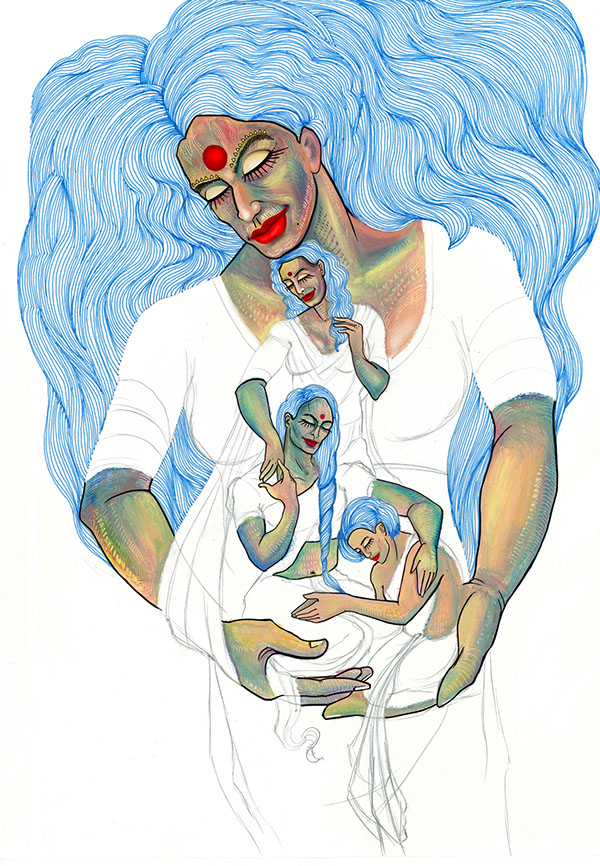
Anjum (Aftab)- protagonist, Hermaphrodite
Jahanara Begum - Aftab's Mother
Aftab/Anjuman/Anjum
Hazrat Sarmad Shaheed - a Jewish American merchant who had traveled to Delhi from Persia in pursuit of the love of his life later he diverse toward spirituality. His tiny dargah is set near Jama Masjid.
Abhay Chand: lover of Sarmad Shaheed
Ustad Hameed Khan - a musician who taught Hindustani classical music
Mulaqat Ali - Aftab's Father, hakim, was a doctor of herbal medicine, and a lover of Urdu and Persian poetry.
Hakim Abdul Majil - founded a popular rand of sherbet called Rooh Afza.
Dr. Ghulam Nabi - a sexologist
Bombay Silk, Bulbul, Razia, Heera, Baby, Nimmo, Mary, and Gudiya all hijras who lived together at Khwabgah
Ustad Kulsoom Bi - a guru of Khwabgah.
Mary - only one Christian in Khwabgah
Gudia&Bulbul - both were Hindus
Bismillah - formerly named Bimla managed the kitchen and guarded Khwabgah
Razia - not a Hijra but she was a man who liked to dress in women, had lost her mind as well as her memory
Nimmo Gorakhpuri: Aftab’s first real friend in the Khwabgah, the youngest of them all and the only one who had completed high school had run away from her home in Gorakhpur where her father worked as a senior division clerk in the Main Post Office.
Dr. Mukhtar - suggested another doctor for Anjum's surgery, more reassuring than Dr. Nabi
Dr. Bhagat - another doctor suggested Anjum, checked Zainab while she was ill.
Zainab - around the three-year-old girl, Anjum found her on the steps of Jama. Masjid and adopted her.
Saqib: Anjum's brother
Zakir Mian - the Proprietor and Managing Director of shop A-I Flower, a friend of Mulaqat Ali
Bibi Ayesha - Anjum's older sister who had died of tuberculosis
Ahlam Baji - the midwife who'd delivered Anjum, a woman on whose tombstone it said (in English) 'Begum Renata Mumtaz Madam'. Begum Renata was a belly dancer from Romania who grew up in Bucharest dreaming of India and its classical dance forms.
Roshan Lal - Headwaiter of the Rosebud Rest-O-Bar who visits Renata Mumtaz’s grave.
Mr.D.D.Gupta - an old client of Anjum
Saddam Hussain - a Chamar, second permanent guest at Jannat Guest House, real name was Dayanand
Payal - Saddam's horse
Sangeeta Madam - boss of Safe n' Sound Guard Service (SSGS)
Anwar Bhai - ran a brothel, one afternoon he came with his daughter's (Rubina) body to a graveyard. (the hospital returned her body with the eyes missing)
Sehrawat - Station House Officer at the Dulian police station who claimed illegally that his father and his friends were 'cow slaughter' it was the cause that his father killed by the mob, Saddam looked for revenge by killing Sehrawat, later he thought to not kill him.
Neeraj - Saddam's friend, from his village who helped him to get a job in the mortuary, the driver
Me.Aggarwal - bureaucrat and aspiring politician
Dr. Azad Bhartiya - against the capitalist empire, real name is Inder Y. Kumar. He continues his 10-year fast and runs a newsletter called "News & Views".
Tilottama: was a student at the Architecture School, a friend of Biplab Dasgupta, Nagaraj Hariharan, and Musa Yeswi, whom she met during their drama when she worked on sets and lighting design for the play ( Norman, Is That You?) mistress of Nagaraj, later divorced him, she loves Musa.
Nagaraj Hariharan: the closest friend of Dasgupta from school to university, a student of history along with Gupta, a top-notch journalist who works in Kashmir.Tilo marries Naga as suggested by Musa for strategic reasons and later abandons him, a corrupted journalist, his works were favored by the Government of India
Musa Yeswi: a reticent Kashmiri man, who joined a militant group, a classmate of Tilo, and boyfriend of Tilo.
R.C.Sharma - Ram Chandra Sharma - a colleague of Dasgupta at Intelligent Bureau. Naga's 'handler'
Imran - a young Kashmiri Police officer who had done some exemplary undercover work for Biplab and his team.
Amrik Singh - 'Spitter', Major, A military officer in charge of counter-insurgency operations in Kashmir. Murderer of Jalib Qadri, a well-known lawyer, and human rights activist. Amrik Sing subsequently seeks asylum in the US claiming to be the victim of the tortures he has inflicted on others. In the novel, he is considered a bad apple.
Biplab Dasgupta (Garson Hobart) - a Brahmin, Deputy Station Head, India Bravo (radio code in Kashmir for the Intelligence Bureau), friend of Tilo, Naga, and Musa. The landlord of his apartment. (probably down south),played a role as Garson Hobart in 'Norman, Is That You?'.
Jalib Qadri: a well-known lawyer and human rights activist, was killed by Amrik Singh, that was confessed by Singh's wife.
Commander Gulrez - Musa
ACP Pinky Sodhi - CRPF Officer, known for her violent interrogation techniques, which seem at odds with her beauty.
Balbir Singh Sodhi - brother of Pinky, a senior police officer who had been shot down by militants.
Auntie Meera - the mother of Naga, a teenage widow, comes from the rom Rajput royal family.
Ambassador Shrivashankar Hariharan - father of Naga.
Loveleen Singh née Kaur - wife of Amrik Singh
Manpreet - Loveleen's friend, a journalist in Srinagar
Miss Jebeen (second) - child of Commander Revathy, adopted by Tilo and Anjum (or even Jannat Guest House/Graveyard)
Ashfaq Mir - Deputy Commandant of Shiraz Cinema JIC.
Aijaz - the youngest son of Mulaqat Ali’s older brother, Qasim, who had moved to Pakistan after Partition and worked for the Karachi branch of Rooh Afza. He was captured in an operation in an apple orchard near Pulwama. Interviewed by Naga.
Abu Hamza - commander of Aijaz, was a Pakistani.
Maryam Ipe - Tilo's mother, belonged to an old, aristocratic Syrian Christian Family, she does not publicly acknowledge her daughter, who suffered from COPD.
Dr.Jacob Verghse - Head of the Department of Critical Care, a medic with the US Army.
Jiten. Y. Kumar: Dr, Azad's older brother who lived on the pavement of Jantar Mantar.
Arifa Yeswi - Musa's wife, mother of Miss Jebeen first
Miss Jebeen - daughter of Musa and Arifa
Hassan Lone - a friend of Musa and his neighbor
Ikhwan Salim Gojri - a friend of major Arikh Singh, later he was killed by him.
Sepoy S.Murugesan - the Untouchable, the Dalit soldier S. Murugesan whose body is sent home to Kerala. A statute is built in the village in his memory. But soon the statue is destroyed because a Dalit cannot be celebrated; his sacrifice is not Indian, he just does not belong to the nation; he is intrinsically incapable of heroism.
Showkat Yeswi (Godzilla) - Musa's father
Tavleen, Harpreet,Gurpreet, Loveleen and Dimple - four sisters of Amrik Singh
Junaid Ahmad Shah- an Area Commander of the Hizb-ul-Mujahideen
Mr. S.P.P. Rajendran - a retired police officer who held an administrative post in the architectural firm when Tilo worked for.
Khadija – An associate of Musa who travels with Tilo
Comrade Revathy Maase – Mother of Miss Jebeen the Second
Here is the table format. Roy used Facts in Fictional stories and their impacts.
Fact
Real Life
Socio-Political Events
Fiction
Their lives adapted by these events
2002 Gujarat riots
Zakir Mian’s death, Anjum safe
Dalits died or bitten in the name of Cow Slaughters
Dayachands father died through mob as the name of cow slaughter
So many people died in the name of Jai Shree Ram!
Dayachand’s father and his friend were killed by hindu mob
The Bhopal
Gas Leak Tragedy
Mentioned in Dr. Azad’s ‘MY NEWS & VIEWS
Anna Hazare Movement 2012
Tubby Gandhian -soldier-turned-village[1]social-worker, who had announced a fast to
the death to realize his dream of a corruption-free India, in TV Shows
statue of Sepoy S. Murugesan, the rifle on its shoulder went missing family
tried to file a complaint, but the police refused to register a case
Here I tried to cover the main points included in the novel in letter-writing form. You can use the comment section for suggestions and corrections if anything is left out.
I also read this letter. Here the video is Embedded.
To: Anjum
At: Graveyard
Dear Anjum.
I read your story. Your story is the pillar of the novel. You were born and brought up in Khwabgah and you saw the dream of identity and happiness. I come to know how you lived in the graveyard like a tree. I would like to call you Hermaphrodite rather than Hijra. Because you are human more than your already definable identity by society. When you were a newborn baby, your beloved mother's Eight reactions said the whole story of your upcoming life. But your father was always busy to elaborating how his own family, descendants of the Mughals, who were Sunni, came to be Shia, and so on. Hazrat Sarmad Shaheed – Hazrat of Utmost Happiness, Saint of the Unconsoled and Solace of the Indeterminate, Blasphemer among Believers and Believer among Blasphemers who blessed you and the new couple.
Khwabgah - 'the House of Dreams' - calling you through Bombay Silk, not directly, but it was your interest, your destiny to live there. Maybe it was the right place where your dreams could live. You lived with other people like you, the friend Nimmo Gorakhpuri and other Hijras. Your life again blooms with the little blessing of Zainab whom you found near the stairs at Jama Masjid when she was around three years old. You enjoyed your life as being celebrated Hijra of the time. But I was wrong when you were saved from Gujarat Riots at Ahmadabad but your destiny then changed. That mob saved you because of your identity (not because she was Muslim but because she was Hijra) and perhaps they got scared that 'Hijron ka maarna apshagun hota hai. (killing Hijras brings bad luck.)Bad luck! That so-called Bad luck was in between Bharat Mata Ki Jai! and Vande Mataram!and Zakir Mian was lost in between. Gujarat ka Lalla was very busy to climb the paradise (in his way) so he didn't care. And then your life turns in Graveyard - 'Jannat Guest House' which was your real Paradise.
Jannat Guest House became a hub for Hijras, the tightly administered grid of Hijra Gharanas. When you heartily welcomed your guest as like yours. Nimmo was one of your old friends who visited. Saddam Hussain whose real name was Dayachand - a Chamar, his backstage life was very much connected with your story. You know Anjum, you and others including Miss Jebeen the second are always the hero of your own story. Dayachand wanted to tack revenge for his father's death who died in the name of 'Cow slaughter' by inspector Sehrawat. He had a mare named Payal. But in the end, he wanted to forget all things when he got married to Zainab.
Then one baby came. Your deep desire blooms again and you want to feel that Joy. You strongly argued with Saddam and he denied your desire to be a mother. I thought that baby might be your Joy, but again Mr. Agrawal came and demanded to not take the baby with her. Though it was another political agenda, again because of your identity also. During that conversation, the baby disappeared. And you all looking for the baby. In Duniya, different scams were created by the media, television viewership skyrocketed all kinds of Euphoria was going on.
Then the story moved to Kashmir. The crown of India! Seventh part 'The Landlord' was narrated by Biplab Dasgupta. From their old college days and the present, they all were quite differently lived. Dasgupta worked at Intelligence Beuro, Nagaraj was a journalist, and Musa joined a militant group. Still, it was the suspense that who the baby was? who were the parents? Tilo- Architect and publisher of Azad Bhartiya’s pamphlet took an abandoned baby girl and named her Miss Jebeen second. Miss Jebeen was the daughter of Musa and Arifa. Arifa and Miss Jebeen were killed during the massacre. This child was of Commander Revathy. She was raped by six police officers and she had no idea who was her father. She wrote a letter to Dr. Azad and wrote about everything that was happened with her. Long scared episode! Then she reviled that she gave her name - Udhaya (new hope) And the story also ended with hope and the role of Dung Beetle,
'He was wide awake and on duty, lying on his back with his legs in the air to save the world in case the heavens fell. But even he knew that things would turn out all right in the end. They would because they had to. Because Miss Jebeen, Miss Udaya Jebeen, was come'.
At the end of the story, I came to know about you more in-depth while Miss Jebeen the second came. Jahanara Begum, you, Tilo, and Revathy are the inspiration to live in The Joy of Motherhood.Your story gives the perspective to live with respect, dignity, courage and with humanity, and love. After suffering from such events, either political or social, you tried to live with a smile and tried to give happiness and you always tried to keep looking for the treasure of happiness that shouldn't be empty in the life of your tenant or family. And that treasure keeps overloaded with your pure blessing upon them. I wish, Udaya will understand what is the role of Guhi Kyom. And I know you will be a supported mother forever.